If you want to know how to start a massage business at home in the US, the key thing to remember is that rules vary by state. Massage therapy licensing is handled at the state level, so requirements in New York may differ from those in Wyoming. Still, most therapists need to understand the same core areas: licensing, business registration, insurance, and local permits.
Demand for at-home and mobile massage services is strong across major US cities, including New York, Los Angeles, Chicago, and Miami. Clients want convenient, personalized sessions from vetted, insured, professional therapists they can trust in their home.
This guide covers the main legal and practical steps to take before your first paid session, including how working through Blys can support a more organized mobile massage practice.
Does Every US State Require A Massage Therapy License?
When you start a massage business at home in the US, the first question you will face is licensing. Most states require a license but not all. The majority of US states require massage therapists to hold a valid state license before they can legally charge for services.
In states with licensing requirements, you will typically need to complete a minimum number of training hours (usually between 500 and 1,000 hours at an accredited school), pass a licensing exam, and submit a formal application to your state’s massage therapy licensing board.
The most widely accepted exam is the MBLEx (Massage and Bodywork Licensing Examination), administered by the Federation of State Massage Therapy Boards. Passing the MBLEx satisfies the written exam requirement in most states, though some have their own exams or additional requirements on top.
Once you hold a state license, you will need to track continuing education requirements most states require a set number of hours per renewal cycle to keep your license active and in good standing.
Which States Don’t Require A License?
A handful of states including Wyoming, Kansas, and Vermont do not have statewide massage therapy licensing requirements. However, even in these states, individual cities and counties may have their own permit requirements.
Operating in an unlicensed state does not mean operating without any oversight. Always check the municipal requirements for your specific city or county before taking on paying clients. Keeping documentation of your training and credentials, even where it is not legally mandated, also builds meaningful credibility with clients who ask about your background before booking.
What Do You Need To Start A Massage Business At Home In The US?
Beyond your massage license, starting a massage business at home in the US involves several layers of registration separate from your professional credentials. Getting these right from the outset avoids compliance headaches as your practice grows and positions you as a trusted professional from day one.
Business Structure And Federal Tax ID
You will need to choose a business structure. Most solo mobile therapists start as sole proprietors or Limited Liability Companies . Forming an LLC provides personal liability protection that sole proprietorships do not offer which matters significantly if a client ever pursues legal action related to your services.
The filing cost for an LLC varies by state but is generally affordable, and the protection it offers is worth it for most independent therapists working at scale. Once your structure is established, you may need an Employer Identification Number from the IRS, particularly if you form an LLC or plan to bring on additional staff at any point.
Local Business License And Zoning
Many cities and counties require a general business license to operate any type of home-based service business including massage therapy. Zoning laws can also restrict the type of commercial activity permitted in residential areas, and some municipalities place specific conditions on health service providers operating from a home address.
Before setting up a home-based practice or receiving clients at your address, check your municipality’s zoning ordinances and local business licensing requirements. Failing to comply can result in fines or forced closure, so it is always better to confirm upfront than to assume permission and find out otherwise later.
What Insurance Does A Mobile Massage Therapist Need In The US?
Two types of insurance matter most when you start a massage business at home in the US: professional liability insurance and general liability insurance. Both are worth holding regardless of whether your state legally requires them.
Professional liability insurance often called malpractice insurance in the health context covers you if a client claims your services caused injury or made their condition worse. In most states, you are not legally required to carry it, but it is standard professional practice across the industry. Many state licensing boards encourage it, and most reputable associations require it as a condition of membership. Annual premiums for solo therapists through major associations are generally very manageable, and the financial protection they provide far outweighs the cost.
General liability insurance covers third-party property damage and bodily injury that occurs during your services. If a client trips on your portable table when you arrive for a home visit, or you accidentally damage something in the home while setting up, general liability is the policy that protects you.
Both the American Massage Therapy Association and the Associated Bodywork and Massage Professionals offer insurance packages as part of their membership, alongside professional development resources and a code of ethics. Membership with either organisation is a sound investment for any therapist building a professional mobile practice from the ground up.
What Does A Professional Mobile Massage Setup Look Like In The US?
State licensing and insurance help establish your legal standing when you start a massage business at home in the US, but clients also judge the full experience. From the first message to the final check-in, every detail should make them feel confident about booking an at-home session with you.
Start every new client relationship with a digital or printed intake form. This should cover current health concerns, medications, recent injuries, pregnancy status, pressure preferences, and any areas the client wants you to avoid or focus on. It helps you plan a safer, more personalized session and gives you clear documentation if a concern ever comes up later.
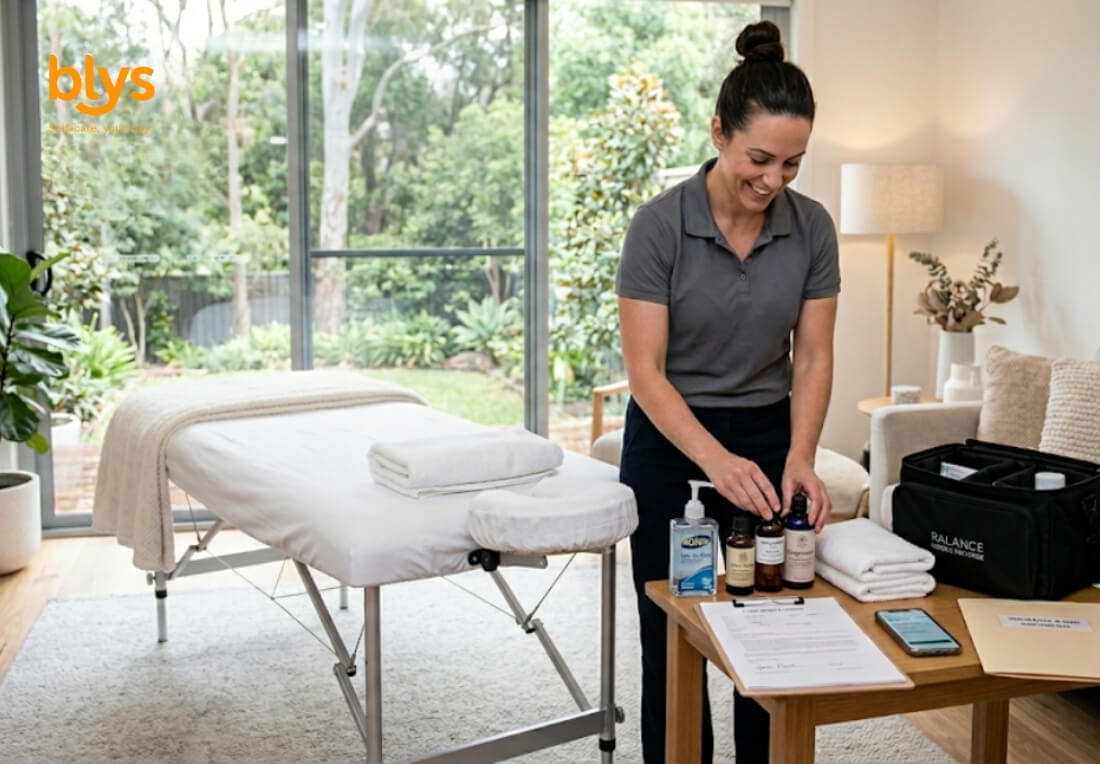
A professional mobile massage setup should include:
- A clean, sturdy, and easy-to-carry massage table.
- Fresh sheets, towels, and table covers for every client.
- Professional-grade oils, lotions, or balms with allergy checks.
- A simple intake and consent process before the session starts.
- A reliable travel kit with hygiene supplies, spare linens, and payment tools.
First impressions matter when you work in a client’s home. Arrive on time, keep your equipment clean, dress professionally, and set up with a calm, organized approach. After the session, a quick check-in about comfort, pressure, and how the client feels can help turn a first booking into a repeat client.
How Does Working Through Blys Support Mobile Therapist Compliance In The US?
For therapists who want to start a massage business at home in the US, working through Blys can make the mobile side of the business easier to manage. You still need to meet your own state licensing, insurance, tax, and conduct requirements, but the platform helps reduce the admin load that often comes with finding and managing clients on your own.
Providers you book through Blys are required to hold a valid state massage license and carry their own liability insurance. These requirements are part of the platform’s vetting process, so clients are connected with insured, vetted, professional therapists who have already met Blys’ standards.
To understand what clients expect from a well-run mobile session, the full body massage guide gives helpful context from the client’s point of view.
Working through Blys can support mobile therapists with:
- Client connections for at-home massage bookings.
- Booking schedules and appointment details.
- Secure payment processing.
- Client communication before and after sessions.
- A more organised way to build a mobile practice without setting up every system from scratch.
Working through Blys does not replace your legal obligations. Your state license, liability insurance, tax reporting, and professional standards remain your responsibility. But if you want to grow your client base while keeping the back-office side more manageable, Blys gives you a practical structure to support a more consistent mobile massage business.
What Should You Have In Place Before Your First Mobile Booking In The US?
Starting a massage business at home in the US begins with your state license and the MBLEx is the clearest path to meeting that requirement in most states. From there, the right business structure, both insurance types, and local permits put you in a strong legal position.
The trusted therapists who build thriving mobile practices are the ones who approach every client touchpoint as a reflection of their expert standards.
Providers working through Blys benefit from a platform that handles client matching and logistics while expecting consistent professional standards. If you are ready to build your client base, explore massage near you to see how the platform connects mobile professionals with clients and consider adding specialities like hot stone massage to differentiate your offering in a competitive market.