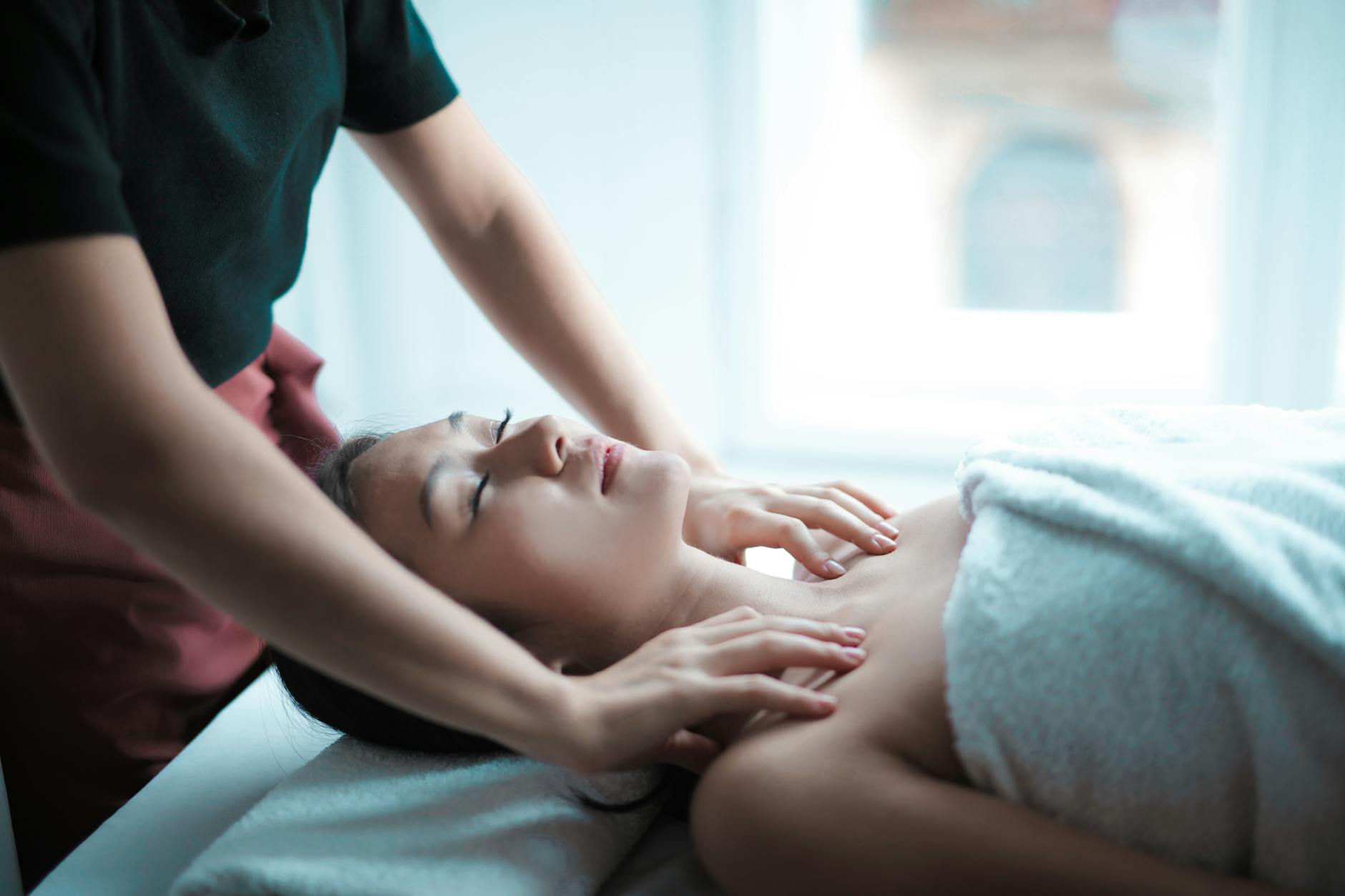
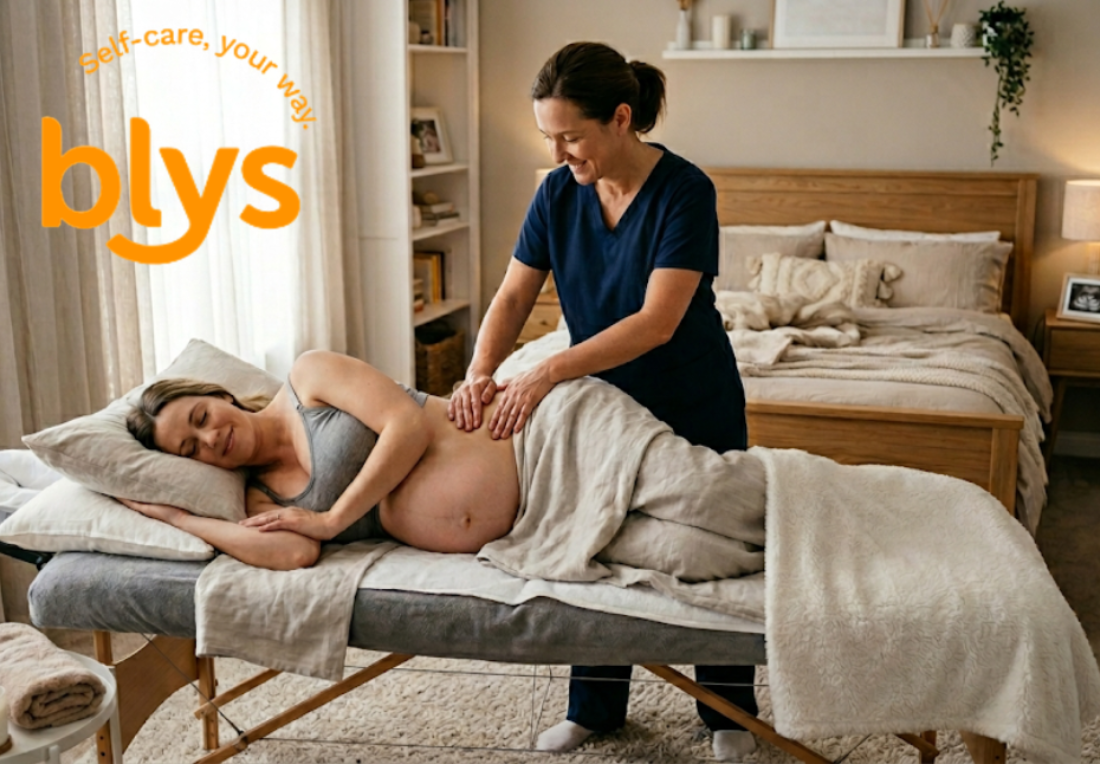
 A prenatal massage at home gives you everything a professional clinic session delivers minus the drive, the parking, and the waiting room that wasn’t designed with a third-trimester body in mind. A vetted, insured professional arrives at your door with everything they need, delivers a focused session in your own space, and leaves you exactly where recovery actually happens: at home, comfortable, with nowhere to be.
This post covers exactly how mobile prenatal massage works in the US what the provider brings, how to prepare your space, what most clients ask for during a session, how Blys vets the providers on its platform, and how to book. Whether you’re in your first trimester or counting the weeks, this is the full picture before you confirm your first session.
What Does The Provider Bring And Do You Need To Have Anything Ready?
This is what most people wonder before their first in-home prenatal massage, and the answer is reassuringly simple: almost nothing on your end.
Providers you book through Blys arrive with everything required to deliver a professional session in your home.
That includes:
- A portable massage table, set up and packed down by the provider you don’t lift anything
- Prenatal-safe massage oils and lotions
- Bolsters and support cushions designed for safe, comfortable side-lying positioning
- Fresh, clean linen for the table
Setup and pack-down add roughly 15 minutes either side of your booked session time. If you’ve booked 60 minutes of massage, plan for around 90 minutes total from when the provider arrives to when they leave.
From the second trimester onward, side-lying positioning is standard practice for prenatal massage. It takes pressure off the inferior vena cava the vein that runs along the right side of the spine while keeping you properly supported throughout.
Getting this right requires expert knowledge of anatomy and prenatal-safe technique; the provider will walk you through positioning before the session begins, so there’s nothing to figure out in advance.
One thing most articles don’t cover: because the table, oils, and all supporting equipment travel with the provider, the quality of the session at home is no different from what you’d receive in a professional clinic. The only difference is who does the commuting and it isn’t you.
How To Prepare Your Space Before The Provider Arrives
You don’t need a dedicated room or any special setup. A clear floor space roughly the size of a twin bed about 6 by 3 feet is all that’s required.
Most clients use:
- A living room with the coffee table moved aside
- A bedroom with open space along one side of the bed
- A spare room or home office if one’s available
Temperature And Lighting
Set the room a degree or two warmer than usual. You’ll be lying still, so you’ll cool down faster than you’d expect. Dimming the lights or closing the blinds is optional, but most clients find it helps them switch off more fully.
What To Wear
Most clients undress to their own comfort level and are draped throughout the session. Others prefer to stay partially clothed. Both are completely fine the provider will explain the draping before the session starts, so there are no surprises.
Children And Pets
If you have other children at home, having a partner or another adult keep them in a separate room for the duration makes a noticeable difference to how fully you can relax. Pets are manageable, though most clients find having them elsewhere for the session is worth arranging.
What Do Most Pregnant Clients Ask For During A Session?
There’s no fixed structure providers you book through Blys check in before starting to understand what you need, and that conversation shapes the session. That said, a few areas come up consistently across every trimester.
- Lower back and hips: As the center of gravity shifts forward and the pelvis tilts, the lower back muscles carry significantly more load than usual. Focused work in this area, using supported side-lying positioning, tends to deliver the most immediate relief. This is the most requested area at every stage of prenatal.
- Legs and feet: Swelling in the lower legs and feet is common, particularly in the second and third trimesters. Providers often incorporate light lymphatic drainage techniques alongside standard massage work to help ease fluid retention. If you’ve been on your feet most of the day, this is usually the first area you’ll raise.
- Shoulders and neck: The postural shifts of prenatal shoulders rolling forward, pelvis tilting add load to the upper back and neck over time. If you’re working from home or spending long stretches seated, this area tends to accumulate tension without you noticing until it’s properly addressed.
Research published via PubMed supports prenatal massage for reducing anxiety, improving sleep quality, and decreasing lower back pain with no adverse effects reported when delivered by an experienced professional.
The American College of Obstetricians and Gynecologists acknowledges that many complementary therapies, including massage, can be appropriate during low-risk pregnancies when discussed with your provider.
For more detail on what a session typically involves, this guide to what to expect from a prenatal massage covers it clearly. And if you’re not certain whether massage is appropriate for your current trimester, the breakdown of prenatal massage by trimester is worth reading first.
How Does Blys Vet The Providers On Its Platform?
Booking someone to come to your home during prenatal is a different kind of decision to visiting a clinic. When you book a prenatal massage at home through Blys, every provider visible on the platform has been through a review and vetting process before they take their first booking.
That includes verification of professional credentials, confirmation of relevant insurance, and an onboarding process designed specifically for in-home service delivery. After each completed session, client ratings and written reviews are collected and displayed on the provider’s profile so their history and experience with prenatal massage is visible before you confirm.
Blys is built specifically around in-home wellness. It isn’t a general marketplace that happens to list massage the platform, the booking flow, and the accountability structure are all designed around home sessions from the ground up. You can read a provider’s profile, check their reviews, see how many prenatal massage sessions they’ve completed, and make a fully informed decision before anyone arrives at your door.
If safety is your main concern before booking, this article on whether prenatal massage is safe covers the research clearly. And this summary of prenatal massage benefits covers what the evidence actually shows.
How Do You Book A Prenatal Massage At Home Through Blys?
Booking through Blys works differently from calling a clinic. No receptionist, no availability calendar to navigate manually, and no waiting to hear back. The whole process is online, transparent, and entirely on your schedule.
Here’s how it works in the US:
- Go to the Blys prenatal massage page and select Prenatal Massage
- Enter your zip code and choose your preferred date and time
- Select a session length 60 or 90 minutes are the most popular choices for at-home prenatal massage
- Browse local providers in your area, with full profiles, experience details, and verified client reviews visible before you confirm
- Book and pay online the platform handles everything, including rescheduling if your plans change
You’ll receive a booking confirmation with your provider’s details. On the day, they’ll be in touch when they’re on their way.
If what your body needs is different this week from last which is entirely normal at every stage of prenatal leave a note when you book. Whether it’s sciatica, hip pain, ankle swelling, or general fatigue, giving the provider that context before they arrive means the session is already shaped to what you need before they knock on your door.
At Home Versus A Clinic: What’s The Actual Difference?
A mobile prenatal massage at home isn’t simply a more convenient version of a clinic visit. There’s one distinction that matters more than the others, and most people only recognize it after they’ve tried both.
At a clinic, you travel to the appointment. You wait. You have the session. Then you get back in the car while your muscles are still warm and your nervous system is still settling. The post-session window when the body is absorbing what the massage delivered happens in transit.
At home, that window is yours to rest through. You stay on the table, move to your bed, or put your feet up on the sofa. That hour after your at-home session when everything is still warm and the tiredness arrives properly is genuinely part of the recovery. At home, you’re not moving through it. You’re resting through it.
For anyone managing the physical demands of prenatal, that difference is real. For many clients who switched from clinic bookings, it’s what kept them booking a prenatal massage at home regularly.
How To Find A Trusted Local Provider And Book Your First Session
A prenatal massage at home turns something that usually involves planning, driving, and recovery in transit into something straightforward. The provider comes to your space, sets everything up, delivers a professional session, and packs down when they’re done. You stay exactly where you are.
To find a vetted, insured professional near you, head to the Blys prenatal massage page and check availability for your zip code. Browse local providers, read their verified reviews, and book directly through the platform no phone calls, no waiting to hear back. Same-day and advance bookings are both available across the US.