 You’ve decided to book a massage. Good call. But then comes the question that trips up almost everyone: Swedish or deep tissue? They sound different, but what does that actually mean for your body, and how do you know which one you need?
Both are among the most popular massage styles available, and both can leave you feeling considerably better than when you arrived. The difference lies in what they’re doing underneath the surface. When it comes to Swedish massage vs. deep tissue, it really comes down to your goals, your pain tolerance, and what your body is asking for right now.
This guide breaks down exactly how each style works, where they differ, and how to make a confident choice before you book.
What Is Swedish Massage?
Swedish massage is often described as the classic massage, and for good reason. It uses a combination of long, gliding strokes (known as effleurage), kneading, tapping, and circular movements to work across the full body. The pressure is gentle to moderately firm, enough to feel effective, but designed to promote relaxation rather than target specific dysfunction.
The primary goals of a Swedish massage are to ease general muscle tension, improve circulation, reduce stress hormones, and support overall well-being. It’s the kind of treatment that slows your nervous system down, quiets mental chatter, and leaves you feeling properly reset, not worked over.
Because it covers the whole body in a systematic way, Swedish massage is well suited to people who are new to massage, those managing general stress or fatigue, or anyone who simply wants to feel looked after for an hour. Research says that massage can help reduce anxiety and support relaxation, and Swedish massage is one of the most accessible ways to experience those effects.
If you’re curious about what a session actually does to your body at a physiological level, the Blys blog has a thorough breakdown in this piece on the science behind Swedish massage benefits.
What Is Deep Tissue Massage?
Deep tissue massage uses slower, more focused pressure to work into the deeper layers of muscle and the connective tissue that surrounds them. Rather than aiming mainly for relaxation, it is often used for ongoing muscle tightness, postural strain, sports-related tension, repetitive-use discomfort, and restricted movement. In most sessions, the therapist will spend more time on specific problem areas instead of giving the whole body the same level of attention.
Because the pressure is more concentrated, deep tissue massage can feel more intense than a standard relaxation massage. Mild soreness for the next 24 to 48 hours can happen, especially if the area has been tight for a long time, but sharp or acute pain is not the goal. A skilled therapist should adjust the pressure based on your feedback throughout the session, which is why communication always matters.
If you’re preparing for your first session and want to know what to expect, this guide to your first deep tissue massage walks you through it.
Swedish Massage vs Deep Tissue: The Key Differences
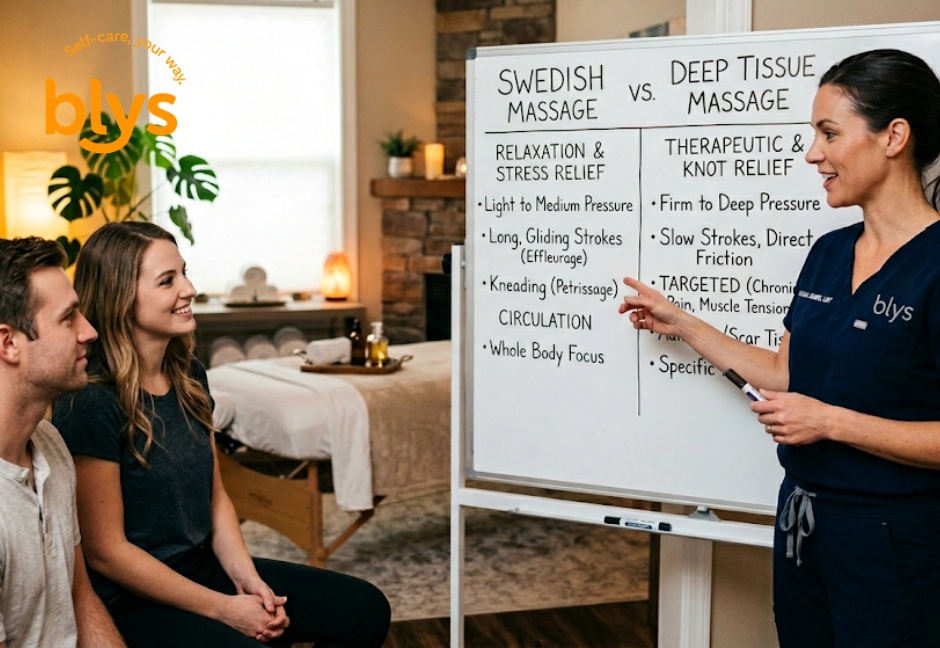
Although both use hands-on techniques to relieve muscle tension, they serve different purposes. Swedish massage is gentler and better suited to relaxation and general stress relief, while deep tissue massage uses slower, firmer pressure to target deeper tension and problem areas. Knowing the difference can make it easier to choose the treatment that fits your needs.
Pressure and Technique
The most immediate difference is pressure. Swedish massage uses lighter, broader strokes that stay at the surface level of muscle tissue. Deep tissue massage applies more concentrated pressure that penetrates into deeper muscle layers and fascia. The strokes in deep tissue work are typically slower and far more deliberate, sometimes pausing on a single area for an extended hold.
Purpose and Outcome
Swedish massage is oriented towards relaxation, stress reduction, and general well-being. Deep tissue massage is more treatment-focused; it’s used to address specific muscle dysfunction, chronic tension, or injury recovery. That said, the line isn’t always rigid. A good Swedish session can still ease muscle tension, and deep tissue work can promote genuine relaxation once the initial intensity subsides.
Who Each Style Suits
Swedish massage tends to suit first-timers, people dealing with stress or anxiety, those who prefer lighter pressure, or anyone wanting a full-body experience. Deep tissue is better suited to people with specific areas of chronic tension or pain, athletes, those recovering from physical strain, or anyone who has had massage before and knows lighter pressure isn’t enough.
How to Choose the Right Massage for You
The easiest way to choose between Swedish and deep tissue massage is to think about what you want from the session. If you are looking for overall relaxation, stress relief, and a gentler full-body treatment, Swedish massage is usually the better fit. If you want help with a specific area of ongoing tightness or discomfort, deep tissue massage is often the more suitable option.
Choose Swedish massage for relaxation and general tension
Swedish massage is a strong choice if you want a gentler treatment that helps your whole body relax. It is well suited to people who want to ease everyday stress, settle mild muscle tension, and enjoy a calm, full-body experience rather than focused work on one specific area.
It may be right for you if:
- You are new to massage and want a gentler starting point
- Your main goal is relaxation, stress relief, or better sleep
- You have general muscle tension rather than one stubborn problem area
- You are sensitive to firmer pressure
- You want a full-body treatment that feels soothing and restorative
For many people, Swedish massage is the easiest place to start, especially if comfort and relaxation matter most.
Choose deep tissue massage for stubborn tightness and focused work
Deep tissue massage is often the better choice when your body needs more than a gentle, relaxing treatment. It is designed to work more directly on areas of ongoing tightness, stiffness, and built-up tension, which makes it a good option for people who want targeted relief rather than a lighter full-body experience.
It may be right for you if:
- You have a specific area of chronic tightness, stiffness, or recurring pain.
- You are active and deal with ongoing muscle tension from training or sport.
- Light to medium pressure does not feel enough for your body.
- You want focused work on postural strain or repetitive-use tension.
- You are trying to improve movement in a problem area with firmer, more concentrated pressure.
For many people, deep tissue massage works best when there is a clear issue to focus on. It can feel more intense than Swedish massage, but when the pressure is applied properly, it may help release stubborn tension that has been sitting in the body for a long time.
Think about your goals, comfort, and current condition
In the end, the right massage often depends on what your body needs at that moment. Swedish massage may be the better option when you want to relax, slow down, and ease general tension. Deep tissue massage can make more sense when you are dealing with a specific area of tightness, physical strain, or discomfort that needs more focused attention. Many people move between the two over time, depending on stress levels, activity, and how their body feels week to week.
A simple way to decide is to match the massage style to your current goal, pressure preference, and any tension you want to address.
| If you want… | Swedish massage may suit you | Deep tissue massage may suit you |
| Relaxation and stress relief | Yes | Sometimes, but not usually the main goal |
| A gentler pressure | Yes | No, pressure is usually firmer and more focused |
| Help with general muscle tension | Yes | Yes, if the tension feels more stubborn |
| Relief for a specific tight or sore area | Sometimes | Yes |
| A full-body calming experience | Yes | Less often |
| Work on chronic tightness or stiffness | Less often | Yes |
| Recovery support after physical strain | Sometimes | Yes |
| A good first massage for beginners | Yes | Usually only if there is a clear issue to address |
This is why there is no single best option for everyone. The better choice is the one that matches your comfort level, your goals, and the kind of relief you want from the session.
What to Expect from a Blys Session
Whether you book a Swedish massage or a deep tissue massage through Blys, the experience starts with a qualified therapist coming to you at home, at a hotel, or at the workplace. There’s no commute, no waiting room, and no rushing out the door straight after your session.
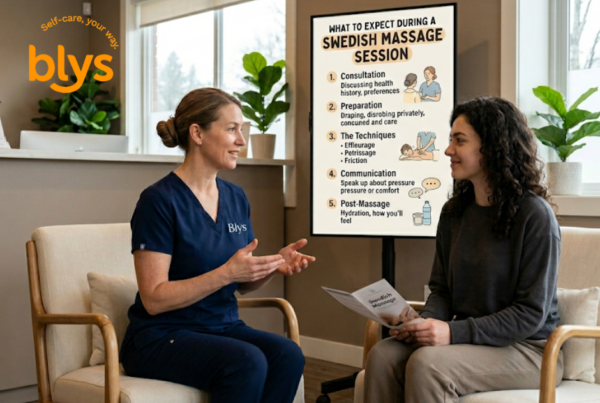
At the start of your session, your therapist will check in about any areas of tension, injuries, or relevant health conditions. This is the right moment to confirm whether you want lighter or firmer pressure and to flag anything you’d like them to avoid. Don’t hesitate to speak up during the session either; a good therapist adjusts in real time based on your feedback.
Massage & Myotherapy Australia recommends choosing registered therapists who have completed nationally recognized qualifications. All Blys therapists are vetted, insured, and professionally trained, so you can focus entirely on the treatment, not on whether your practitioner is qualified.
Wrapping Up
Swedish and deep tissue massage both offer real benefits, but the right choice depends on what your body needs at the time. If you want to relax, reset, and ease general tension, Swedish massage is usually the better fit. If you are dealing with ongoing tightness, stubborn knots, or a specific area that needs more focused work, deep tissue massage may give you the relief that lighter pressure cannot.
It is also worth remembering that your needs can change. You might prefer deep tissue massage during periods of heavy training, long desk hours, or physical strain, then switch to Swedish massage when your focus shifts to rest and recovery. Both styles have their place, and choosing between them does not have to be permanent.
If you are still unsure, you can always speak with your Blys therapist before your session. They can help you decide which approach best suits your comfort level, goals, and current condition. Book with Blys and enjoy the convenience of having the right therapist come to you.